There are more unusual weather signs in the news. Two of the articles below show extreme weather. Los Angeles & Oceanside recorded record low levels while Kentucky has heat and moisture causing corn to pop in the fields.
More seriously still embedded in the corn popping story was the fact that Corn crops are down 20% this year. There are also panics and riots beginning throughout the world due to actual food shortages and fears of what’s to come.
The east coast braces for what looks like a near miss for a category 3 or 4 hurricane, with evacuations beginning this afternoon.
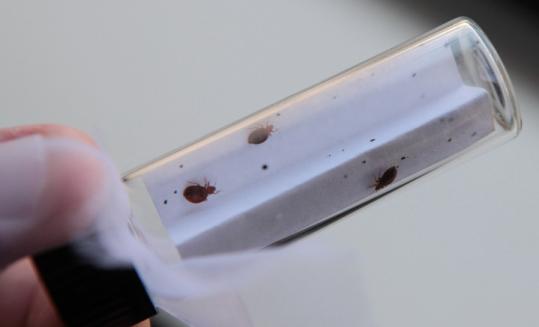
Finally, we are seeing pestilence hit the US mainland with the spread and return of bed bugs. It has been spreading up and down the east coast with the first stories coming out of New York a few weeks back.
God is trying to get our attention, we need to wake up and turn back to him.
These are the birth pains predicted in Matthew and Luke.
_________________________________________________________________
Low temperatures tie records at LAX, Oceanside
September 1, 2010 | 9:12 pmRecord low temperatures for the date were tied Wednesday at Los Angeles International Airport and Oceanside in San Diego County.
The temperature was 58 degrees at LAX, tying a record set in 1951, the National Weather Service said. Oceanside dropped to 66 degrees, tying a record that has stood since 1914.
——————–
Bedbug fears put bite on the hotel industry
Boston’s luxurious Eliot Hotel offers its guests perks such as free use of a sports club and a complimentary shoeshine. But one recent guest thought she saw a little something extra that was not on the list of amenities: a bedbug in her bed.
It turned out to be a false alarm — “a tiny little speck of black lint,’’ said Pascale Schlaefli, general manager. But it momentarily sent the hotel staff into a panic in what has turned out to be bedbug summer.
These are anxious times in the hotel industry. The pests — which hide in mattresses and bite people while they sleep — are constantly in the news, and no place feels safe anymore. Bedbugs have been reported everywhere from basement apartments to college campuses to the Empire State Building. Suddenly everyone is tearing off sheets and turning over mattresses.
——————–
Kentucky farmer’s corn pops in the field
You expect to find popcorn in the grocery store
.. but what about in farm field? A Hardin County farmer says that some ears of his corn in a field have ‘popped’ on the stalk. Patrick Preston took photos of his popcorn and sent it to the UK Ag Extension for an explanation.
“The other guys were asking if he had put butter on it and if he sold it that way. They’re really giving him a hard time about it,” says UK Extension Agent Dr. Chad Lee.
But it doesn’t look like you might think.
“The picture that was sent look like a bunch of popped corn, it’s yellow. It’s not white popcorn looking but corn literally did pop in the field. It was that hot,” says Dr. Lee.
Dr. Lee explains that the kernels formed during a time of high heat, then it rained and kernels began filling again.
“It kept filling until it actually ruptured the seed coat and caused it to pop open,” says Dr. Lee.
Exploding kernels are very uncommon and something most agriculture agents have never seen before with this kind of corn. The E-town farmer along with many others across the Bluegrass
Dr. Lee says, “We’re seeing maybe a 20% drop in corn from what we had last year and very erratic conditions.”
At this time in the season, rain is not needed. The corn stalks have to dry in the fields before it’s harvested.
——————–
Fears grow over global food supply
Russia announced a 12-month extension of its grain export ban on Thursday, raising fears about a return to the food shortages and riots of 2007-08 which spread through developing countries dependent on imports.
The announcement by Vladimir Putin came as the UN’s Food and Agriculture Organisation called an emergency meeting to discuss the wheat shortage, and riots in Mozambique left seven dead.
The unrest in Maputo, in which 280 people were also injured, followed the government’s decision to raise bread prices by 30 per cent. Police opened fire on demonstrators after thousands turned out to protest against the price hikes, burning tyres and looting food warehouses.
Although agricultural officials and traders insist that wheat and other crop supplies are more abundant than in 2007-08, officials fear the deadly Mozambique riots could be replicated.
The 2007-08 food shortages, the most severe in 30 years, set off riots in countries from Bangladesh to Mexico, and helped to trigger the collapse of governments in Haiti and Madagascar.
The Russian announcement extended an export ban first announced last month until late December 2011, sending wheat and other cereals prices to near a two-year high.
The FAO said that “the concern about a possible repeat of the 2007-08 food crisis” had resulted in “an enormous number” of inquiries from member countries. “The purpose of holding this meeting is for exporting and importing countries to engage.”
Russia is traditionally the world’s fourth-largest wheat exporter, and the export ban has already forced importers in the Middle East and North Africa, the biggest buyers, to seek supplies in Europe and the US.
Mr Putin said Moscow could “only consider lifting the export ban after next year’s crop has been harvested and we have clarity on the grain balances”. He added that the decision to extend the ban was intended to “end unnecessary anxiety and to ensure a stable and predict-able business environment for market participants”.
“This is quite serious,” said Abdolreza Abbassian, of the FAO in Rome. “Two years in a row without Russian exports creates quite a disturbance.” Dan Manternach, chief wheat economist at Doane Agricultural Services in St Louis, added: “This is a wake-up call for importing nations about the reliability of Russia.”
Jakkie Cilliers, director of South Africa’s Institute of Security Studies, said there was concern over a repeat of the protests of 2008: “That certainly strengthened a return of the military in politics in Africa.”
–
–
–
——————–
Hurricane Warning Expanded to Mass. Coast as Earl Barrels Toward East Coast
A hurricane warning was expanded Thursday to include part of the Massachusetts coast including Nantucket as Hurricane Earl barreled toward the Eastern Seaboard, packing winds of 140 mph.
The National Hurricane Center in Miami also issued a tropical storm warning along the Connecticut and Rhode Island coasts into Massachusetts.
“Hurricane and tropical storm conditions will be expected in these areas over the next 48 hours,” said Bill Read, director of the National Hurricane Center.
Earl, a powerful Category 4 hurricane, was expected to hit the Outer Banks of North Carolina late Thursday with top sustained winds near 140 mph and higher gusts. The center of Earl was about 300 miles (485 kilometers) south of Cape Hatteras, N.C.
——————–
Island evacuations start as Earl nears East Coast
NAGS HEAD, N.C. – Hurricane Earl steamed toward the Eastern Seaboard early Thursday as communities from North Carolina to New England kept a close eye on the forecast, worried that even a slight shift in the storm’s predicted offshore track could put millions of people in the most densely populated part of the country in harm’s way.
Vacationers along North Carolina’s dangerously exposed Outer Banks took advantage of the typical picture-perfect day just before a hurricane arrives to pack their cars and flee inland, cutting short their summer just before Labor Day weekend.
The governors of North Carolina, Virginia and Maryland declared states of emergency, sea turtle nests on one beach were scooped up and moved to safety, and the crew of the Navy’s USS Cole rushed to get home to Norfolk, Va., on Wednesday ahead of the bad weather. The destroyer was supposed to return later this week from a seven-month assignment fighting piracy off Somalia.
_________________________________________________________________
Click on the article title for a link to full original referenced article.
 myBlessedHope